

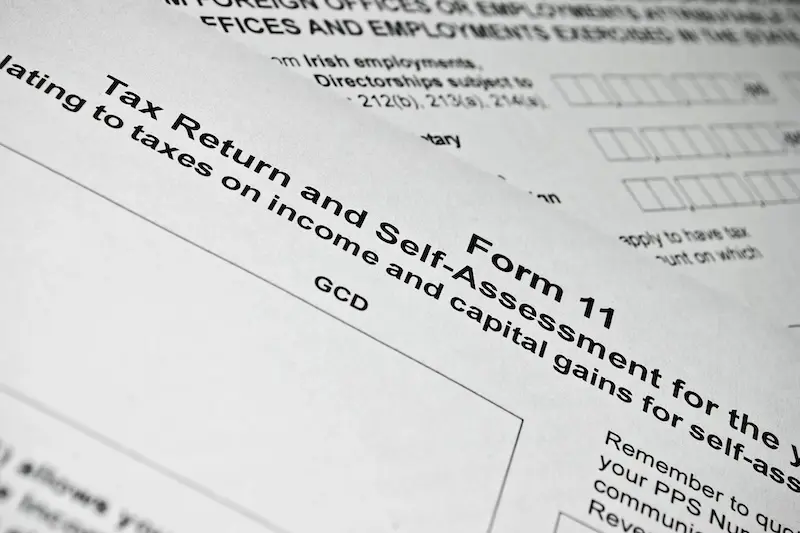
Filing your income tax returns can feel complicated, particularly when you are unsure what income to declare, which expenses you can claim or how much tax you need to pay – which is why a Form 11 Tax Return guide is of massive help.
In simple terms, Form 11 is the annual Income Tax return used by people within Ireland’s self-assessment system. It brings together your income, allowable expenses, tax credits, reliefs and tax payments for the previous calendar year.
You may need to file one if you are self-employed, receive rental income, are a company director or earn a significant amount of income outside PAYE.
This guide explains who must file Form 11, what information is required, the relevant deadlines and how to complete your return correctly.
What is a Form 11 tax return?
Form 11 is the annual tax return used by individuals who are considered chargeable persons under Ireland’s self-assessment system.
It is used to report income and calculate any:
- Income Tax
- Universal Social Charge (USC)
- Pay Related Social Insurance (PRSI)
- Balance of tax due for last year
- Preliminary tax payment
A Form 11 can include several different types of income, such as:
- Self-employed or trading income
- PAYE employment income
- Rental income
- Company director income
- Foreign income
- Dividends and investment income
- Capital gains information
- Pension income
- Other income earned outside PAYE
It can also include allowable expenses, tax credits, pension contributions and other reliefs that may reduce your final liability.
Most taxpayers who are required to file Form 11 do so online through the Revenue Online Service, known as ROS. Revenue may pre-populate parts of the return with information it already holds, but you remain responsible for checking that the completed return is accurate.
Who needs to file a Form 11 in Ireland?
You will generally need to file Form 11 if you are a chargeable person for Irish Income Tax purposes.
This commonly includes self-employed individuals, landlords, proprietary company directors and people with substantial income outside the PAYE system.
Form 11 Tax Return Ireland for self-employed people
If you operate as a sole trader, freelancer, contractor or consultant, you will normally use Form 11 to report the profits from your business.
This can apply even where self-employment is not your main source of income. For example, you may have a PAYE job while also earning money from consulting, freelance projects or an online business.
Your taxable business profit is not necessarily the same as the total amount paid into your bank account. It is generally calculated by deducting allowable business expenses from your trading income and making any required tax adjustments.
Possible allowable expenses may include:
- Professional and accountancy fees
- Business insurance
- Advertising and marketing
- Software and subscriptions
- Office supplies
- Business telephone and internet costs
- Qualifying travel costs
- Rent for business premises
- Payment-processing fees
- Repairs to business equipment
Personal expenses are not normally deductible. Where an expense has both personal and business use, only the appropriate business portion may be claimed.
Form 11 Tax Return Ireland for landlords
Rental income is non-PAYE income and may require you to enter the self-assessment system.
Landlords may need to report:
- Total rent received
- Allowable repairs and maintenance
- Insurance and management fees
- Qualifying mortgage interest
- Professional expenses
- Rental losses carried forward
Not every property-related cost is automatically deductible. In particular, improvements of a capital nature are generally treated differently from ordinary repairs.

Form 11 Tax Return Ireland for company directors
Proprietary company directors are also generally required to file Form 11, even where their salary has already been taxed through PAYE. In some circumstances, the jointly assessed spouse or civil partner of a proprietary director may also have a filing obligation.
According to Revenue, you must generally register for Income Tax self-assessment where your:
- Taxable non-PAYE income exceeds €5,000 in a year, or
- Gross non-PAYE income exceeds €30,000 in a year
Where your income remains below both limits, it may be possible to declare it through Revenue’s myAccount service instead.
The €5,000 threshold refers to taxable income after allowable expenses. The €30,000 threshold refers to gross income before expenses.
Form 11 versus Form 12
Form 11 and Form 12 both allow taxpayers to declare income, but they are intended for different circumstances.
Form 11 is generally used by chargeable persons within the self-assessment system, including:
- Sole traders
- Proprietary directors
- Landlords with income above the relevant limits
- Individuals with substantial non-PAYE income
Form 12, which is generally completed through myAccount, is intended for PAYE taxpayers who need to declare a smaller amount of additional income but are not considered chargeable persons.
The correct return depends on your complete financial circumstances. Having a PAYE job does not automatically mean that Form 11 is unnecessary.
What information do you need for Form 11?
Form 11 is a complete Income Tax return. You must consider all relevant sources of income rather than reporting only the income that brought you into self-assessment.
You may need:
- Business sales and expense records
- PAYE income details
- Rental statements
- Bank and investment statements
- Foreign income information
- Pension contribution certificates
- Medical and tuition-fee receipts
- Dividend vouchers
- Details of asset purchases or disposals
- Information about previous losses
- Prior tax returns and assessments
Revenue generally requires chargeable persons to retain the records supporting their tax returns for six years.
Good records are essential. Estimates and incomplete information can result in income being omitted, expenses being overstated or valid reliefs being missed.
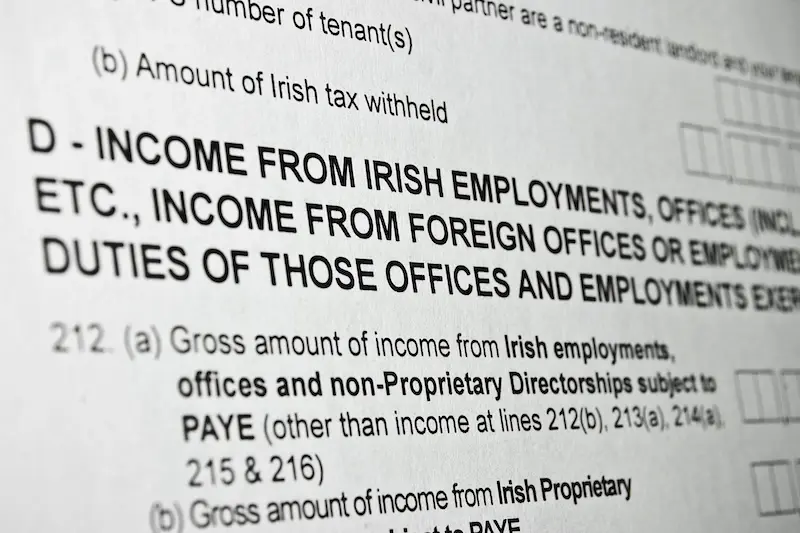
Form 11 Tax Return guide: Deadlines and preliminary tax
The Irish tax year runs from 1 January to 31 December.
Under the Pay and File system, taxpayers normally have until 31 October of the following year to:
- File the previous year’s Form 11
- Pay any outstanding balance for that year
- Pay preliminary tax for the current year
For the 2025 tax year, the standard filing deadline is 31 October 2026. Revenue has announced an extended deadline of 18 November 2026 for taxpayers who both file their return and make the relevant payment through ROS.
Deadlines can change, so you should always confirm the applicable date through Revenue before filing.
Form 11 tax returns and preliminary tax
Preliminary tax is an advance payment towards your expected Income Tax, USC and PRSI liability for the current year.
For example, when filing your 2025 return in 2026, you may also need to make a preliminary tax payment towards your 2026 liability.
This can confuse first-time filers. The amount payable at the deadline may include both:
- The outstanding balance for the previous tax year
- An advance payment for the current tax year
Revenue provides several methods for calculating preliminary tax. The correct method can depend on your previous liability, your expected current-year liability and whether you are newly registered for self-assessment.
Failing to pay enough preliminary tax may result in interest.
Form 11 Tax Return guide: Common mistakes
Form 11 errors often arise from misunderstanding the rules rather than entering a number in the wrong box.
Common problems include:
- Reporting turnover instead of profit: Turnover is your total business income before expenses. Taxable profit is calculated after allowable expenses and relevant tax adjustments.
- Leaving out PAYE income: Form 11 covers your overall Income Tax position. PAYE income must still be included, even if tax has already been deducted through payroll.
- Forgetting smaller income sources: Bank interest, dividends, freelance payments, rental income, online earnings and foreign income may all need to be considered.
- Claiming personal expenses: An expense does not become tax-deductible simply because it was paid from a business bank account.
- Missing valid claims: Taxpayers can also pay too much tax by failing to claim allowable business expenses, rental deductions, pension relief or personal tax credits.
- Misunderstanding preliminary tax: Budgeting only for the previous year’s balance can leave you unprepared for the preliminary tax payment.
- Relying entirely on pre-populated information: Revenue’s pre-populated details can make filing easier, but the information still needs to be checked. You are responsible for ensuring that the return is complete.
What happens if you file late?
Submitting Form 11 after the deadline can result in a surcharge being added to your tax liability.
Interest may also apply where tax is paid late. Continued non-compliance can lead to further Revenue correspondence or collection action.
A common mistake is to avoid filing because the full tax payment is not immediately available. Filing and payment are separate obligations. Delaying the return may increase the overall cost and make the issue harder to resolve.
Where a return has already been submitted incorrectly, it may be possible to amend it through ROS. The correct approach will depend on the nature of the error and whether it resulted in an underpayment.
Can you complete Form 11 yourself?
You can prepare and submit your own Form 11 through ROS.
However, completing the form is only one part of the process. You also need to determine:
- Which income must be declared
- Which expenses are allowable
- Whether tax credits or reliefs apply
- How rental or foreign income should be treated
- Whether capital allowances are required
- How much preliminary tax to pay
- Whether the return is complete and accurate
A straightforward return with organised records may be manageable. The process becomes more difficult where you have several income sources, rental properties, foreign income, a company directorship, capital gains or incomplete records.

Complete your Form 11 simply and correctly with help from Tax Return Pro
At Tax Return Pro, our Form 11 Tax Return service provides a clear, guided way to complete your Form 11 accurately, efficiently and without the stress of dealing with Revenue alone.
The service is designed for:
- Self-employed individuals
- Company directors
- Landlords
- Contractors and consultants
- People earning income outside PAYE
- Individuals with multiple income sources
The process is structured from start to finish:
- 1. Register on the Tax Return Pro tax platform.
- 2. Complete a clear, step-by-step tax questionnaire.
- 3. Tax Return Pro, accessible as your registered Tax Agent, prepares your return using your answers and relevant Revenue information.
- 4. Your return is issued to you for review, understanding and approval.
- 5. Once approved, it is filed with Revenue, with relevant queries handled on your behalf.
We combine smart technology with more than 30 years of tax expertise to help you:
- Organise your information clearly
- Follow a structured process
- Complete your Form 11 accurately
- Identify relevant claims and deductions
- Submit your return confidently and on time
Our site is structured, guided and designed to remove confusion, so you can complete your return properly and stay in control. If you’re ready to clean up your taxes once and for all, explore our Form 11 Tax Return services or get in touch with us for further help.
Note: This article provides general information about taxation in the Republic of Ireland and does not constitute advice based on your individual circumstances. Tax rules and deadlines can change. Always check the latest Revenue guidance before acting.